Hillsboro: Police HQ Block Could Hold About 149 Homes in 10th Avenue Plan Headed to Council

- The Hillsboro Police Department's headquarters block at 10th Avenue and Washington Street could one day hold about 149 homes, under a preliminary concept in a city strategy now headed to the City Cou…
- The vote before the council is narrower than the housing sketch.
- Vice President Mujidat Saaka signed the order; the packet does not record a vote count.
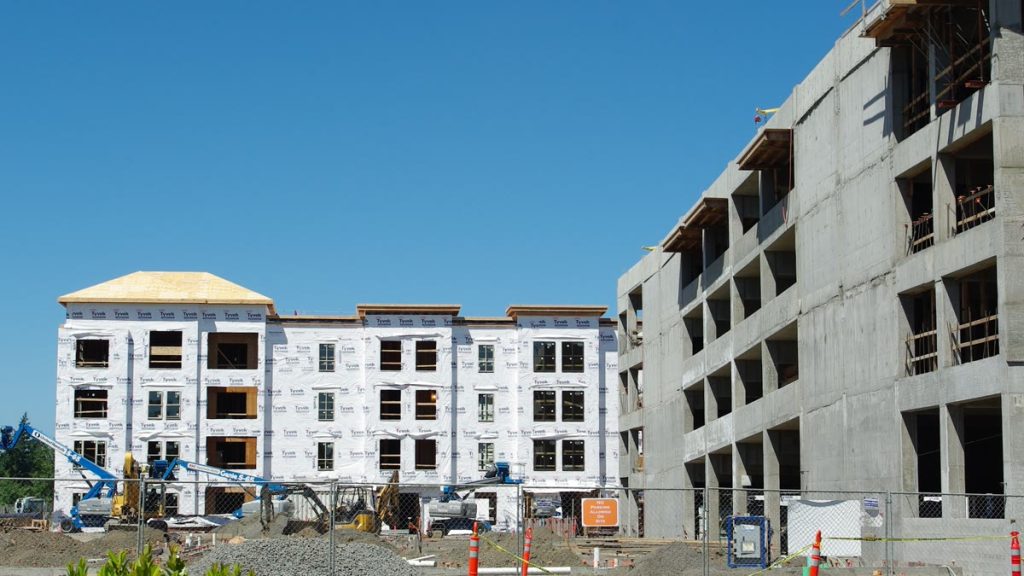
The Hillsboro Police Department’s headquarters block at 10th Avenue and Washington Street could one day hold about 149 homes, under a preliminary concept in a city strategy now headed to the City Council. The Planning Commission recommended the Avenida Diez/10th Avenue Equitable Development Strategy on Oct. 14, and a staff timeline shows council readings on Nov. 3 and Nov. 17.
The vote before the council is narrower than the housing sketch. Order No. 8504 asks councilors to “incorporate by reference” the strategy into the Downtown Framework Plan section of the Hillsboro Comprehensive Plan. It does not approve a building, a developer or any money, and the staff report says later actions “will be evaluated through the City’s annual budget process.”
Vice President Mujidat Saaka signed the order; the packet does not record a vote count. The strategy grew from a resident advisory committee that met more than 20 times between 2024 and 2026 and outreach that reached over 600 people, the document says.
Three ways to reuse the police block
That input shaped a study of three paths for the City-owned land. Option 1 would refurbish the 35,371-square-foot police building, originally an Albertson’s grocery store, for commercial or civic use. Option 2 would redevelop only the City’s property; Option 3 would take in the whole block, including the privately owned Hillsboro Plaza.
Option 2B, two four-story wood-frame buildings, was picked for more study as the “preliminary preference.” It shows about 149 homes, 800 square feet of shops, 2,100 square feet for community or City services and 123 parking stalls, 52 of them tucked under the buildings. The consultant’s cost chart compares the options:
| Option | What happens to the block | Homes | Parking stalls | Total cost | Modeled funding gap |
|---|---|---|---|---|---|
| 1: Refurbish | Keeps the police building | None added | Existing lot unchanged | $7.5 million | $600,000 |
| 2B: City land, wood frame (preferred) | Replaces the building and police lot; Hillsboro Plaza stays | 149 | 123 | $40.4 million ($271,000 per home) | $11.3 million |
| 2C: City land, all affordable | Same City land, rents for 30% and 60% of area median income | 129 | 98 | $38.8 million ($301,000 per home) | $4.2 million |
| 3A: Whole block | Adds Hillsboro Plaza and a private parking lot | 344 | 262 | $108.1 million ($314,000 per home) | $34.3 million |
| 3B: Whole block, taller | Same land, with 5- and 6-story buildings and a plaza | 382 | 290 | $119.2 million ($312,000 per home) | $36.0 million |
Source: Appendix D feasibility memo, Exhibit 2 (packet pages 212–216). The funding gap is the cost that loans and investor equity would not cover.
Option 2C’s smaller gap assumes winning competitive 9% federal housing tax credits, which the memo says brings “substantial uncertainty.” After weighing funding sources and community goals, the City chose 2B, which could include more flexible, mixed-income units, over 2C, which would be all affordable at 30% and 60% of area median income.
Even the preferred plan needs a subsidy
Option 2B still needs gap funding, the memo says. It puts Building A, on the police building’s lot, at $26.3 million with a $7.6 million gap, and Building B, on the police parking lot, at $14.1 million with a $3.7 million gap. A 10-year Vertical Housing Development Zone tax break would lower Building A’s gap to about $6.9 million.
Those figures assume market rents of about $1,530 a month for a studio up to about $2,400 for a three-bedroom, roughly 76% to 80% of area median income. The memo says the City still prefers a whole-block project in the long run and is in “productive discussions” with the neighboring owner.
A schedule that starts with the police move
The block is in play because the department is moving; the memo says headquarters is relocating “north near the Hillsboro Airport and NE Evergreen Road.” Its approximate schedule has the City choosing a development partner by mid-2027, police moving out in the first quarter of 2029, and construction running from spring 2029 to late 2030.
Minutes of an Aug. 18 council work session, in the Oct. 6 council packet, say staff “stressed that no concept has been formally selected.” The minutes say community feedback stressed adequate parking, larger homes and maintaining a police presence, though the memo says the concept does not explicitly include a station.
Lights, storefronts and a place in line
The police block is one of 20 actions, and a few are already moving. A 2024 lighting study found stretches of the corridor below City and state standards. All 72 recommended fixtures were replaced in fall 2025, and adding fixtures to existing poles is underway, with new poles the costliest step.
The strategy says storefront and tenant improvement grants top out at $40,000 and suggests raising that to $75,000. A higher tier of up to $150,000 could favor longtime businesses, with a rent-increase cap for tenants when a landlord takes the money. For housing, the strategy proposes giving longtime residents priority for some affordable units, piloted first on City-owned sites such as the police block.
How to speak to the council
Council agendas note that ordinances are normally adopted over two meetings, and the city’s meeting portal listed no Nov. 3 agenda as of Oct. 21. Regular sessions start at 7 p.m. in the Civic Center Auditorium and on Zoom. On Oct. 20, public commenters got three minutes, signing up with a yellow card or registering for Zoom by 3 p.m. at [email protected] or 503-681-6269.
Top image: File photo, 2013: four-story apartments under construction in Hillsboro’s Orenco Station area (illustrative; not the police block). Photo: M.O. Stevens, CC BY-SA 3.0, via Wikimedia Commons (cropped).
