Hillsboro: Hagg Lake Ends Water Year 36.6% Full; City Used Most Stored Water Among Partners

- Henry Hagg Lake ended the water year on Sept.
- A dashboard in the same packet shows Hillsboro had used 7,183.5 acre-feet of its stored water by Oct.
- The commission owns stored water in Hagg Lake, which sits behind Scoggins Dam, and in Barney Reservoir.
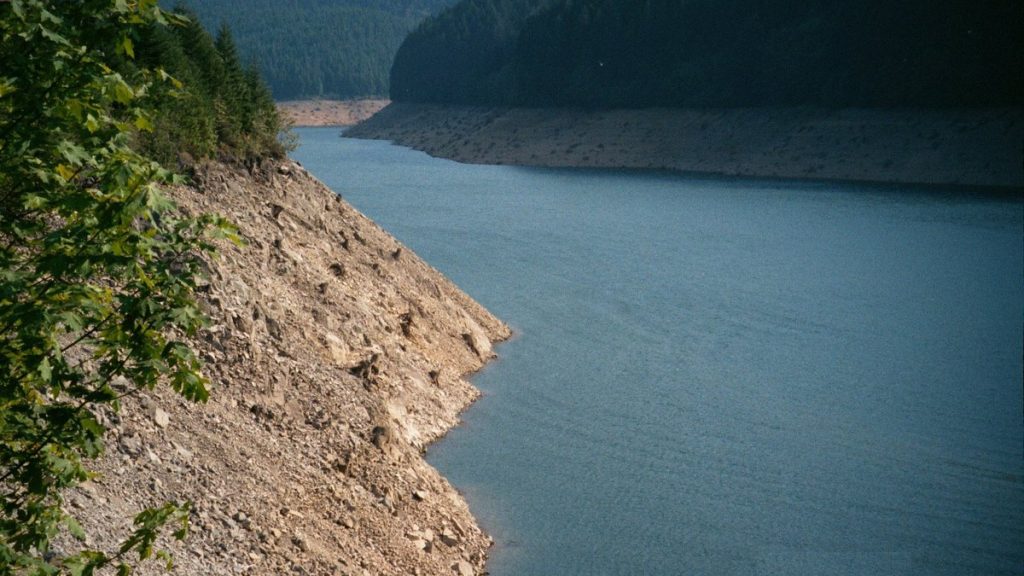
Henry Hagg Lake ended the water year on Sept. 30 at 36.6% full, holding 19,533 acre-feet at an elevation of 267.5 feet. That figure comes from a storage chart in the Joint Water Commission’s packet for its Oct. 16 meeting.
A dashboard in the same packet shows Hillsboro had used 7,183.5 acre-feet of its stored water by Oct. 4. That was more than any other partner in the commission, which Hillsboro shares with Beaverton, Forest Grove and the Tualatin Valley Water District.
Stored water, and what it covers
The commission owns stored water in Hagg Lake, which sits behind Scoggins Dam, and in Barney Reservoir. According to the dashboard, that water supplies the partners when they are cut off from their Tualatin River natural-flow water rights in summer and early fall. This year, releases for the commission began May 22.
An acre-foot is enough water to cover one acre a foot deep. The dashboard covers stored water only, and it does not say how much of Hillsboro’s total supply came from storage.
How Hillsboro compares with its partners
The dashboard lists each partner’s stored water used and remaining as of Oct. 4. Adding the two gives each partner’s season total. Dividing use by that total gives the share used. Both of those steps are our calculations.
| Partner | Used (acre-feet) | Remaining (acre-feet) | Share used (our calculation) |
|---|---|---|---|
| Hillsboro | 7,183.5 | 2,943.9 | 70.9% |
| Beaverton | 4,081.1 | 3,475.0 | 54.0% |
| Tualatin Valley Water District | 3,207.5 | 2,581.5 | 55.4% |
| Forest Grove | 1,219.4 | 3,694.1 | 24.8% |
Together, the four partners used 15,691.5 acre-feet, and Hillsboro accounted for 45.8% of it, by our math. That total lines up with the dashboard’s combined releases of 8,003 acre-feet from Barney and 7,688 from Hagg Lake.
How full is 36.6%?
The packet’s storage chart plots this year against water years back to 1976, but it gives no figure for a typical end-of-September level. The U.S. Bureau of Reclamation’s Tualatin Project page lists Hagg Lake’s active capacity at 53,600 acre-feet. Measured against that, 19,533 acre-feet works out to 36.4%, by our math. The packet does not say what capacity figure its 36.6% uses.
Stored water also figures in a staff request on leasing. Staff asked commissioners to let a smaller executive committee approve water leases between meetings. They cited below-average summer rain, the early May 22 start of releases and possible feed water needs for the Willamette Water Supply System. The report says “some partners may need additional capacity beyond their ownership shares” in late 2026, but it does not name which partners.
What the treatment plant reported
The commission treats its water at a plant on Fern Hill Road near Forest Grove. In the third quarter, the plant averaged 44.9 million gallons a day of finished water, according to its quarterly report. Its highest day was 54.1 million gallons and its lowest was 34.8 million.
The report says finished water met all water quality parameters. Chemical costs averaged $3,412 a day, or $76 per million gallons, and alum was the largest cost at $136,527.41.
The quarter’s events included a lightning-caused power outage on July 23. They also included an emergency shutdown of the 42-inch pipe link at Jackson Bottom on Sept. 23, after a leak on the regional water line.
Getting ready for algae season
The packet also reported results of a study on powdered activated carbon, a fine powder added during treatment. Staff tested it to prepare for possible cyanotoxin and taste-and-odor events. Cyanotoxins are toxins that some algal blooms can produce, and the U.S. Environmental Protection Agency lists drinking water supplies among the risks.
The staff report says the carbon “can be effectively integrated” into the plant’s process. It also says the powder helped settling, so murky particles were removed earlier in treatment. The report does not describe a current algae event.
Staff recommend more tests of blended or wood-based carbon products. They also recommend tests at 40 to 50 milligrams per liter, which they call the expected range for such an event. The contract with Carollo Engineers is $60,000, with $41,210 spent so far. The report says the full study is available on request.
The commission’s next meeting is set for Jan. 15, 2027, in Room 113B at the Hillsboro Civic Center. It follows a related 12:30 p.m. board meeting. Public comment is limited to three minutes. Remote speakers must register with the Water Department office by noon on meeting day at 503-615-6702.
Top image: Illustrative image, 2001: low water exposes the shoreline behind Detroit Dam in Oregon (not Hagg Lake). Photo: Robert Ashworth, CC BY 2.0, via Wikimedia Commons (cropped).
