Washington County: Flock Camera Deal Runs Into 2027 as Lawmakers Plan Statewide Ban

- When Washington County bought Flock Safety camera trailers for retail theft cases last year, its written case for skipping competitive bidding leaned on the company's network, including a nationwide…
- The county's Board of Commissioners approved the deal on April 15, 2025, as a consent agenda item.
- Oregon's public contracting law allows a sole-source contract when a county makes written findings that only one seller can meet the need.
When Washington County bought Flock Safety camera trailers for retail theft cases last year, its written case for skipping competitive bidding leaned on the company’s network, including a nationwide database of license plate reads. Eighteen months later, the sheriff’s office says the Flock contract ends next spring, and two Oregon lawmakers plan a bill to ban Flock-style cameras statewide.
The county’s Board of Commissioners approved the deal on April 15, 2025, as a consent agenda item. The approval record, MO 25-68, authorized a sole-source contract of up to $396,591 with Flock to buy “surveillance trailers for use by law enforcement in retail theft investigations.” The money came from an organized retail theft grant that the Oregon Criminal Justice Commission awarded to the Washington County District Attorney’s Office.
Why the county said only Flock would do
Oregon’s public contracting law allows a sole-source contract when a county makes written findings that only one seller can meet the need. Washington County’s findings focused on Flock’s network more than its hardware.
Flock “has the largest database of results” from its license plate readers, the findings say, with systems deployed across the metro area, the state and the country. To use that database, the county had to buy Flock’s hardware. Even when police are “unable to contact a suspect vehicle,” the findings add, they “can search Flock Safety’s nationwide database for prior contacts.” The connected cameras can also track a vehicle’s direction of travel after a crime when it passes another Flock camera.
The record lists “None” under known community support or opposition, and “None” under prior board action.
How the county has described the cameras since
Last fall, as residents raised fears that the cameras could help federal immigration enforcement, the sheriff’s office stressed the limits on who can see the data.
At a Nov. 18, 2025, board briefing, Sheriff Caprice Massey said the grant bought seven Flock camera systems for local agencies at a total cost of about $396,000, the Hillsboro News-Times reported. Massey said the sheriff’s office does not share the data with ICE, the U.S. Border Patrol or any law enforcement agency outside Oregon. The briefing slides said the sheriff’s office operated three mobile camera trailers and several smaller mobile cameras, and that retailers such as Lowe’s and Home Depot share access to Flock data when crimes occur.
A follow-up briefing on Feb. 10, 2026, went further. Its slides say there is “no automatic participation in national search networks,” that sharing is “case-specific and policy-based,” and that data is kept for a defined period and then deleted.
Read side by side, the two sets of county documents describe the same purchase differently: the 2025 findings stress the nationwide database as the reason to buy, while the 2026 slides stress that the county controls any sharing case by case. Neither document says how often county users have searched Flock’s wider network.
Where things stand now
- Cameras not in use: In August, sheriff’s spokesperson Cpl. David Huey told KOIN that the office has 14 license plate reader-style cameras that are not in use and that its Flock contract will expire in spring 2027, according to KOIN’s report.
- Fair use described: On Sept. 15, sheriff’s representatives told the Hillsboro City Council that Flock cameras had been used at the county fair for safety and to help locate missing children, according to the council’s draft minutes. The minutes also say plate reader information sharing is limited to local law enforcement.
- State rules: Senate Bill 1516, signed March 31, limits plate reader data retention to 30 days unless it is tied to a criminal inquiry or court case. It lets out-of-state police get data only for a specific law enforcement purpose, with each request logged.
- Possible ban: Reps. Willy Chotzen, D-Portland, and Alek Skarlatos, R-Winston, plan to introduce legislation in 2027 to ban Flock-style cameras, OPB and the Oregon Capital Chronicle reported in September. A Flock spokesperson told the outlet that a blanket ban “would take a proven investigative tool away from communities and officers.”
The rule that decides who signs off next time
Whether the board will vote again before any renewal is less clear. On Aug. 18, 2026, commissioners adopted updated county Rules of Procurement by a 4-0 vote, with Commissioner Jason Snider absent, according to the meeting minutes.
Written comments filed for that meeting argued that the rules do not define surveillance technology and that renewals or added cameras can be handled without a board vote. They asked commissioners to require a public vote before the county buys, renews or expands such technology. The motion the board adopted, as recorded in the minutes, removed the word “equity” where it had not been corrected and does not mention surveillance technology.
The Flock contract’s spring 2027 end date, as given by the sheriff’s office, would fall during the 2027 legislative session, when the two lawmakers plan to introduce their ban.
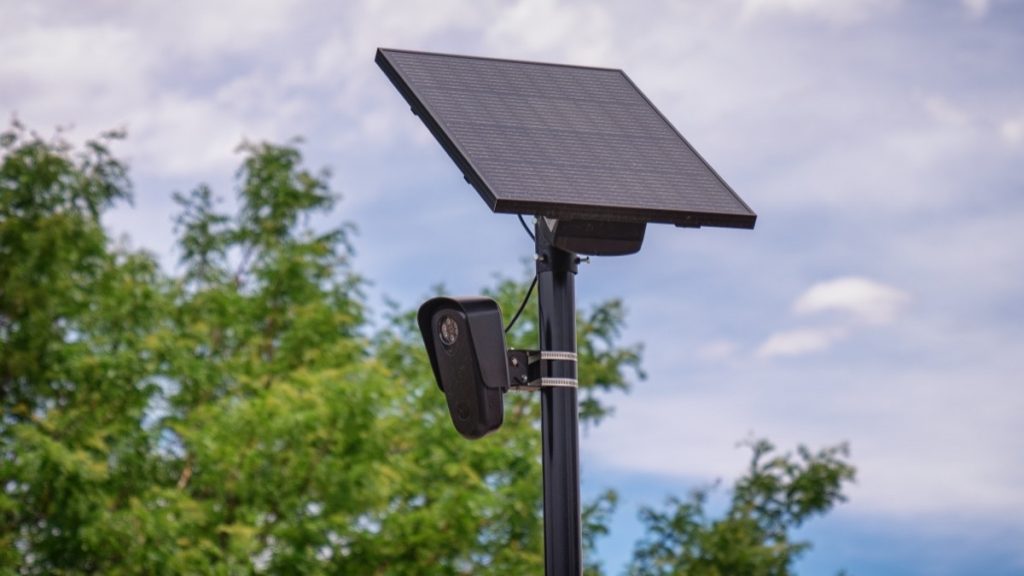
Top image: Illustrative image: a Flock Safety license plate reader camera in Aurora, Colorado, June 2024; not a Washington County camera. Photo: Tony Webster, CC BY 2.0, via Wikimedia Commons (cropped).
