Hillsboro: Councilors Seek Work Session on Flock Cameras and Plate Readers

- Two Hillsboro city councilors want a work session on Flock cameras and license plate readers.
- Councilor Olivia Alcaire asked for a session focused on Flock and automated license plate readers in the city, according to the draft minutes of the meeting.
- The sheriff's chief deputy and Patrol Commander Jordan Weston gave the county's annual public safety update.
Two Hillsboro city councilors want a work session on Flock cameras and license plate readers. Their requests came at the Sept. 15 council meeting, after a briefing from the Washington County Sheriff’s Office raised questions about how the cameras are used and who can see their data.
Councilor Olivia Alcaire asked for a session focused on Flock and automated license plate readers in the city, according to the draft minutes of the meeting. Councilor Kipperlyn Sinclair repeated earlier requests for a session on the legal questions and on possible rules or bans for Flock, plate readers, AI drones and other surveillance tools. The minutes are on the consent agenda for the council’s Oct. 20 meeting, where councilors are scheduled to consider approving them.
What the sheriff’s office told the council
The sheriff’s chief deputy and Patrol Commander Jordan Weston gave the county’s annual public safety update. Among the technology they described were body-worn cameras, in-car video, a drone as first responder pilot, AI-assisted report writing and license plate readers, which the minutes say are “used strictly for criminal investigations.”
Alcaire asked about license plate readers and Flock cameras, including their use at the county fair. Deputies said the cameras were used there for safety and to help find missing children, the minutes say. The chief deputy said the sheriff’s office does not assist U.S. Immigration and Customs Enforcement with plate reader information and would follow up on how long data is kept.
Sinclair asked for written copies of the sheriff’s plate reader policies, audits, data-sharing limits and drone policies, and whether any local code covers surveillance technology. Sinclair also asked about grant-funded growth in drones and mobile plate readers. The chief deputy said more research was needed to confirm how many cities would join a shared agreement with the county. Later in the meeting, Sinclair raised a plate reader camera that a developer had installed in South Hillsboro.
During public comment, one speaker urged the city to ban plate reader cameras, and another said the sheriff’s office had misrepresented its use of Flock cameras.
Hillsboro’s own plate readers
The questions are not only about the county. Hillsboro police run their own plate reader program, and an internal audit shared with the council in January showed how data sharing went wrong at the start.
According to Police Chief Jim Coleman’s audit memo dated Jan. 17, 2026, included in the council’s Jan. 20 work session packet, the department uses two trailer-mounted plate readers run through Motorola’s Vigilant system. When the system went online in April 2025, staff were prompted to connect with agencies across the country. The department meant to limit access to local and regional agencies, but some out-of-state agencies that agreed to its data-sharing terms were granted access. The memo calls this an “administrative error” that was fixed by restricting sharing to agencies in Oregon.
The memo then lists 36 “hits,” meaning searches that matched plates captured by Hillsboro’s readers, logged after Nov. 20, 2025:
| Agency | Hits |
|---|---|
| Gresham Police Department | 22 |
| Medford Police Department | 6 |
| Central Oregon Drug Enforcement | 4 |
| Lansing Police Department (Illinois) | 3 |
| Riverside Police Department (state not listed) | 1 |
The memo says the department asked Motorola and Vigilant why an agency outside Oregon could search the data at a time when access was limited to in-state agencies. The company “acknowledged the bug” but had not explained it, the memo says. The department does not see why another agency runs a search, the memo adds, but such queries are typically about stolen vehicles, suspects in state or local crimes, or plates entered without a state.
How the program got here
- April 8, 2025: Hillsboro police begin deploying the two plate reader trailers, bought in 2024 with federal homeland security and state organized retail theft grants.
- Nov. 18, 2025: At a council work session, Coleman says the readers are standalone units not connected to any statewide or national network, the Hillsboro News-Times reported.
- Nov. 20, 2025: All deployments are paused for the audit.
- Jan. 17, 2026: The audit memo says data is purged after three years, a setting that can be changed within state law, and that the department will resume using the readers after confirming that only Oregon agencies that sign its agreement have access.
- March 31, 2026: Gov. Tina Kotek signs Senate Bill 1516, which limits retention of plate reader data to 30 days unless it is linked to a criminal inquiry or court case, and requires vendors to give agencies monthly and quarterly audits that must be public.
- Sept. 15, 2026: Two councilors ask for a work session on Flock and plate readers.
The memo predates the new state law, so its three-year retention figure may no longer reflect current practice. The documents reviewed for this story do not show whether Hillsboro has changed that setting or resumed deployments.
Cameras the school district says it won’t use
At the same meeting, a Hillsboro School District official answered residents’ concerns about $10 million budgeted for cameras. The district will not use AI-powered cameras, automated license plate readers or surveillance technology linked to law enforcement, the minutes say; its cameras are for on-campus safety, and footage is stored locally.
The Oct. 20 agenda does not include a work session on the topic. That meeting’s regular session starts at 7 p.m. in the Civic Center Auditorium and on Zoom.
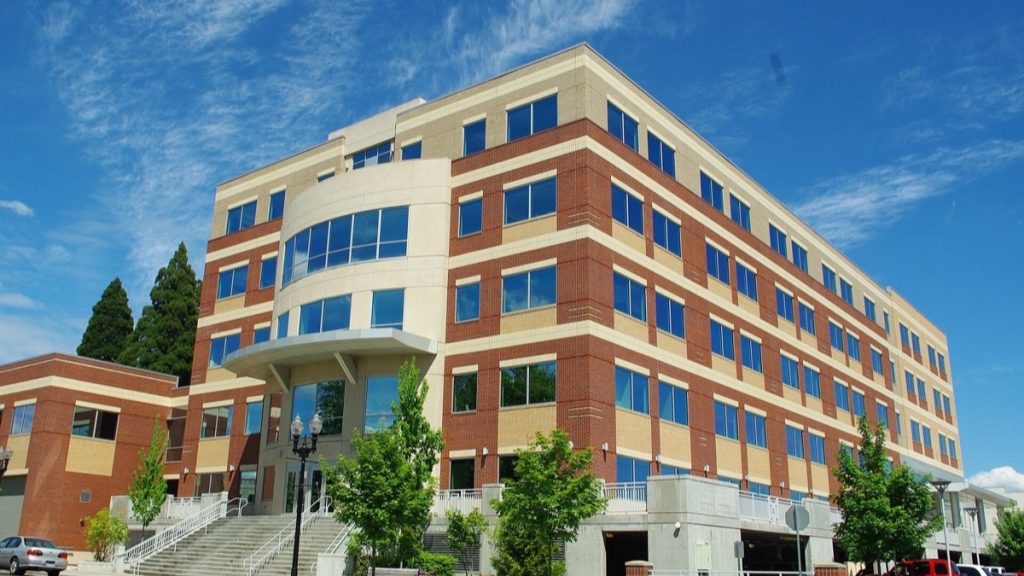
Top image: File photo, 2009: the Hillsboro Civic Center, where the City Council meets. Photo: M.O. Stevens, CC BY 3.0, via Wikimedia Commons (cropped).
