Oregon: Drug Helpline Report Ranks State Last in the U.S. on Drug Problems

- Editor's note: This article was first published on January 21, 2023.
- Oregon came last in a new state-by-state ranking of drug problems from the National Drug Helpline, a privately run addiction-referral website.
- Utah ranked first with 88 points, followed by Georgia with 83 and South Dakota with 82.
Editor’s note: This article was first published on January 21, 2023. Its original text was lost when Focus Hillsboro rebuilt its website, so it was rewritten and re-checked against the primary sources linked below on Oct. 24, 2026.
Oregon came last in a new state-by-state ranking of drug problems from the National Drug Helpline, a privately run addiction-referral website. The report, posted Jan. 11, gave Oregon 43 out of a possible 100 points, the lowest score of the 50 states.
Utah ranked first with 88 points, followed by Georgia with 83 and South Dakota with 82. Just above Oregon at the bottom were Montana with 44, Vermont with 45, and Colorado, Massachusetts and Rhode Island, tied at 47.
How the helpline scored the states
The report rated each state on 25 indicators, each worth up to 4 points. They cover overdose and alcohol deaths, teen drug and alcohol use, use of specific substances, diagnosed use disorders and access to treatment, including the average cost of rehab. A state earned 1 to 4 points per indicator, depending on which band its figure fell into.
Most of the survey figures come from the Substance Abuse and Mental Health Services Administration’s National Survey on Drug Use and Health state tables, which average 2018 and 2019. Other inputs came from the CDC, the website Drug Abuse Statistics and two WalletHub rankings. The report says it accessed its sources on Jan. 2, 2023.
The report does not publish a breakdown of Oregon’s 43 points. Its one Oregon-specific finding is that the state was worst for pain reliever misuse, with 4.56% of residents 12 and older reporting misuse in the past year. It also put Oregon on a “red alert” list with 10 other states.
What the federal survey shows for Oregon
The SAMHSA tables behind the ranking show Oregon above the national rate on each of these measures for people 12 and older.
| Measure (ages 12+, 2018–19 average) | Oregon | U.S. |
|---|---|---|
| Illicit drug use, past month | 19.84% | 12.34% |
| Marijuana use, past year | 26.99% | 16.71% |
| Pain reliever misuse, past year | 4.56% | 3.58% |
| Substance use disorder, past year | 9.45% | 7.41% |
| Needed but did not receive specialty treatment for substance use, past year | 8.64% | 6.88% |
Among states, only Vermont, at 21.13%, had a higher past-month illicit drug use rate than Oregon. SAMHSA’s illicit drug measure counts marijuana along with cocaine, heroin, hallucinogens, inhalants, methamphetamine and misuse of prescription psychotherapeutics. Among Oregonians aged 18 to 25, past-year marijuana use was 47.28%.
Limits of the ranking
The ranking is a compilation by a private website, not a government study. The site says it is “owned and operated by a for-profit company,” and that calls to its general hotline are answered by American Addiction Centers. Its survey figures come from 2018 and 2019, before Oregon voters approved Measure 110 in November 2020.
Some placings are close. SAMHSA’s table lists Alabama at 4.55% for pain reliever misuse, one-hundredth of a point below Oregon, and the two states’ 95% intervals overlap. The same table lists Illinois at 2.84%, lower than the 2.95% the report gives for New York as the best state.
Audit says Measure 110’s results can’t yet be measured
Separately, on Thursday, Jan. 19, Secretary of State Shemia Fagan’s Audits Division released Report 2023-03, a review of the Oregon Health Authority’s rollout of Measure 110. That measure decriminalized possession of small amounts of drugs and shifted cannabis tax money to addiction services.
Its title states the main finding: “Too Early to Tell.” Auditors warned of “a significant risk” that lawmakers and the public will be unable to judge whether the program works, citing grant management and data collection. They found the health authority collected little to no data on $33 million in early Access to Care grants.
The audit also cited SAMHSA data showing Oregon had the second-highest substance use disorder rate in the nation in 2020 and ranked 50th for access to treatment. As of Sept. 22, 2022, administrative costs were 7% of program spending against a 4% cap, though more grant money was still to go out.
Auditors made four recommendations to the health authority, which agreed with all of them, including publishing a plan by September 2023 for fitting Measure 110 into Oregon’s behavioral health system. They made four more to the Legislature, such as staggering the oversight council’s terms. Two more audits are due by Dec. 31, 2024.
Update, Oct. 24, 2026
Oregon later changed course on possession. House Bill 4002, signed by the governor on April 1, 2024, increased penalties for unlawful drug possession starting Sept. 1, 2024, making it a “drug enforcement misdemeanor.”
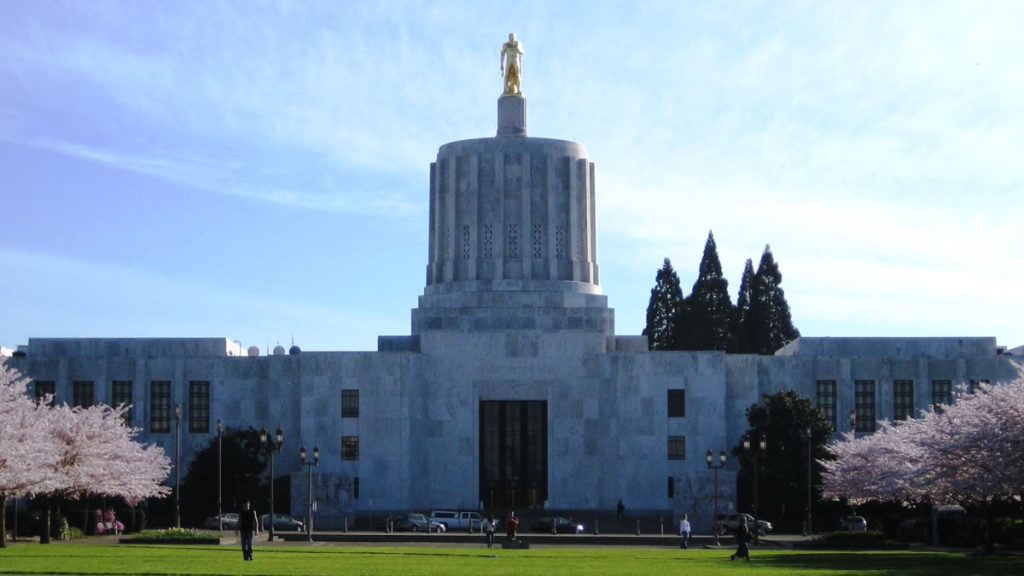
Top image: File photo: the Oregon State Capitol in Salem. Photo: M.O. Stevens, public domain, via Wikimedia Commons (cropped).
